

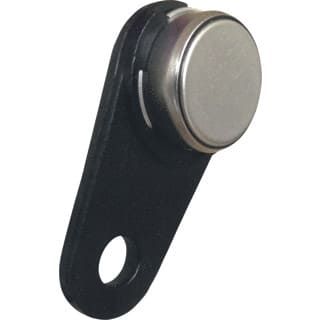
Mobeye AC-TAG1 Tag voor in- en uitschakelen
Mobeye AC-TAG1 Tag voor in- en uitschakelen
- Voor het bedienen van Mobeye producten, die uitgerust zijn met tag reader
Beschikbaarheid: Op voorraad
SKU
AC-TAG1


Mobeye AC-TAG1 Tag voor in- en uitschakelen
Product details
- Voor het bedienen van Mobeye producten, die uitgerust zijn met tag reader
Toepassing
- Inbegrepen bij Mobeye CMVXI-R, max. 25 tags per product
- Eén tag kan op meerdere producten werken
Klantenreviews
Vragen
Hello, can you please explain the differences in RFiD, EM and MiFare protocols.
Thanks
Thanks
Vraag van: Frank op 24 feb 2026, 09:45
MIFARE, RFID, Wiegand, and EM represent different components and technologies within the access control and identification industry. RFID is the overarching radio technology, MIFARE and EM are specific types of RFID, and Wiegand is the protocol used to communicate that data.
RFID - Radio Frequency Identification
RFID is the broad technology that uses radio waves to identify objects or people. It consists of a tag (card/fob) and a reader.
RFID allows contactless reading of data. It is divided into Low Frequency (LF), High Frequency (HF), and Ultra-High Frequency (UHF).
Key Difference: This is the umbrella term for all radio technologies.
EM Protocol (EM4100/EM4200) - 125kHz
EM cards are a popular type of 125 kHz Low-Frequency (LF) RFID tag, often called "Proximity" cards.
These cards transmit a fixed 40-bit or 64-bit ID number when placed near a reader. They are passive and do not have internal security, meaning they are very easy to clone.
Key Difference: Low cost, no data storage capacity, easily cloned, and low security. Best for basic entry.
MIFARE (NXP Semiconductors) - 13.56MHz
MIFARE is a brand of 13.56 MHz High-Frequency (HF) RFID smart cards, complying with ISO/IEC 14443A.
MIFARE cards are "smart cards" that have an embedded microcontroller and memory. They support mutual authentication (the reader authenticates the card, and vice versa).
Regards
RFID - Radio Frequency Identification
RFID is the broad technology that uses radio waves to identify objects or people. It consists of a tag (card/fob) and a reader.
RFID allows contactless reading of data. It is divided into Low Frequency (LF), High Frequency (HF), and Ultra-High Frequency (UHF).
Key Difference: This is the umbrella term for all radio technologies.
EM Protocol (EM4100/EM4200) - 125kHz
EM cards are a popular type of 125 kHz Low-Frequency (LF) RFID tag, often called "Proximity" cards.
These cards transmit a fixed 40-bit or 64-bit ID number when placed near a reader. They are passive and do not have internal security, meaning they are very easy to clone.
Key Difference: Low cost, no data storage capacity, easily cloned, and low security. Best for basic entry.
MIFARE (NXP Semiconductors) - 13.56MHz
MIFARE is a brand of 13.56 MHz High-Frequency (HF) RFID smart cards, complying with ISO/IEC 14443A.
MIFARE cards are "smart cards" that have an embedded microcontroller and memory. They support mutual authentication (the reader authenticates the card, and vice versa).
Regards
Antwoord door: Frank Ligthart (Admin) op 24 apr 2026, 12:20
Dag, als ik deze tag aan een sleutelbos doe, kan de tag daar tegen of is deze kwetsbaar en moet er een hoesje omheen?
Vraag van: Werner op 21 jan 2024, 21:04
Geen probleem, kan gewoon aan uw sleutelbos zonder hoesje.
MvG
MvG
Antwoord door: Frank Ligthart (Admin) op 23 jan 2024, 10:01