
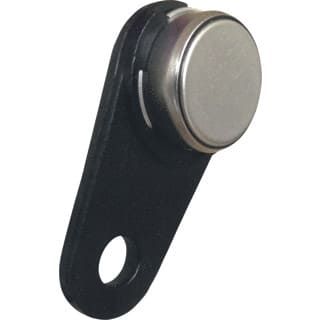
Mobeye AC-TAG1 Tag for arming and disarming
Mobeye AC-TAG1 Tag for arming and disarming
- To operate Mobeye devices featuring a tag reader
Verfügbarkeit: Auf Lager
Artikelnummer
AC-TAG1


Mobeye AC-TAG1 Tag for arming and disarming
Product details
- To operate Mobeye devices featuring a tag reader
Application
- Included in Mobeye CMVXI-R, max. 25 tags per product
- One tag may be used for several devices
Kundenbewertungen
Fragen
Hello, can you please explain the differences in RFiD, EM and MiFare protocols.
Thanks
Thanks
Frage von: Frank An 24.02.2026, 09:45
MIFARE, RFID, Wiegand, and EM represent different components and technologies within the access control and identification industry. RFID is the overarching radio technology, MIFARE and EM are specific types of RFID, and Wiegand is the protocol used to communicate that data.
RFID - Radio Frequency Identification
RFID is the broad technology that uses radio waves to identify objects or people. It consists of a tag (card/fob) and a reader.
RFID allows contactless reading of data. It is divided into Low Frequency (LF), High Frequency (HF), and Ultra-High Frequency (UHF).
Key Difference: This is the umbrella term for all radio technologies.
EM Protocol (EM4100/EM4200) - 125kHz
EM cards are a popular type of 125 kHz Low-Frequency (LF) RFID tag, often called "Proximity" cards.
These cards transmit a fixed 40-bit or 64-bit ID number when placed near a reader. They are passive and do not have internal security, meaning they are very easy to clone.
Key Difference: Low cost, no data storage capacity, easily cloned, and low security. Best for basic entry.
MIFARE (NXP Semiconductors) - 13.56MHz
MIFARE is a brand of 13.56 MHz High-Frequency (HF) RFID smart cards, complying with ISO/IEC 14443A.
MIFARE cards are "smart cards" that have an embedded microcontroller and memory. They support mutual authentication (the reader authenticates the card, and vice versa).
Regards
RFID - Radio Frequency Identification
RFID is the broad technology that uses radio waves to identify objects or people. It consists of a tag (card/fob) and a reader.
RFID allows contactless reading of data. It is divided into Low Frequency (LF), High Frequency (HF), and Ultra-High Frequency (UHF).
Key Difference: This is the umbrella term for all radio technologies.
EM Protocol (EM4100/EM4200) - 125kHz
EM cards are a popular type of 125 kHz Low-Frequency (LF) RFID tag, often called "Proximity" cards.
These cards transmit a fixed 40-bit or 64-bit ID number when placed near a reader. They are passive and do not have internal security, meaning they are very easy to clone.
Key Difference: Low cost, no data storage capacity, easily cloned, and low security. Best for basic entry.
MIFARE (NXP Semiconductors) - 13.56MHz
MIFARE is a brand of 13.56 MHz High-Frequency (HF) RFID smart cards, complying with ISO/IEC 14443A.
MIFARE cards are "smart cards" that have an embedded microcontroller and memory. They support mutual authentication (the reader authenticates the card, and vice versa).
Regards
Antwort von: Frank Ligthart (Admin) An 24.04.2026, 12:20